
Can Light Therapy Really Give You Better Skin, Cleaner Teeth and Stronger Joints?
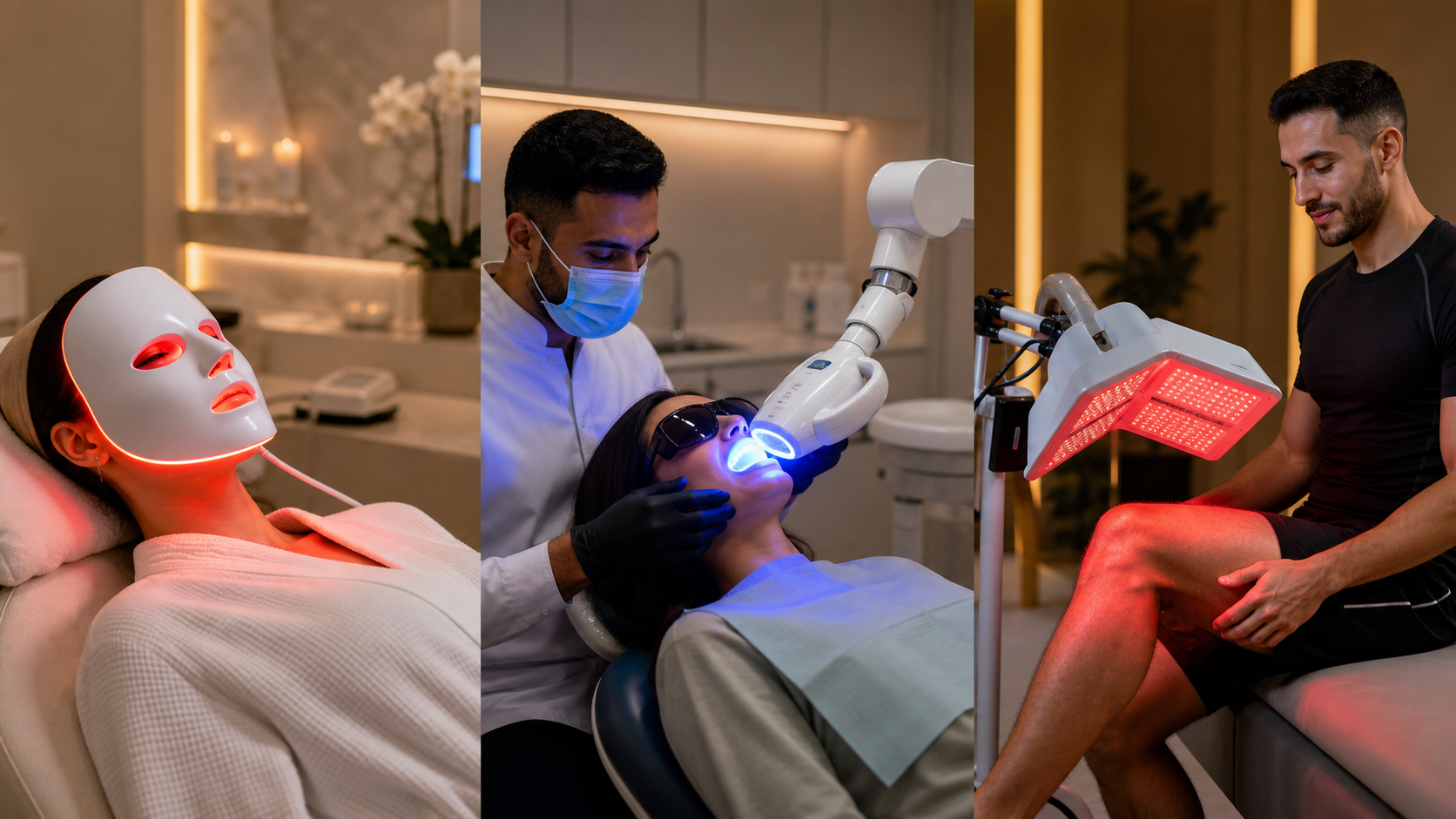
A glowing mask for younger-looking skin. A blue dental lamp for a brighter smile. A red-light panel promising happier knees, faster recovery and less pain.
Light therapy has moved far beyond the dermatologist’s office. It now appears in dental clinics, gyms, recovery studios, wellness hotels and increasingly sophisticated home devices.
The concept sounds irresistible: no needles, no medication and almost no effort—just let the light do the work. But can different colours of light genuinely improve your skin, clean your teeth and strengthen your joints?
The short answer is more interesting than a simple yes or no. Light can affect living tissue, and certain treatments have credible medical uses. But the evidence changes dramatically depending on the wavelength, dose, device and condition being treated.
Here is what the glow can really do.
First, what is light therapy?
“Light therapy” is an umbrella term covering several very different treatments.
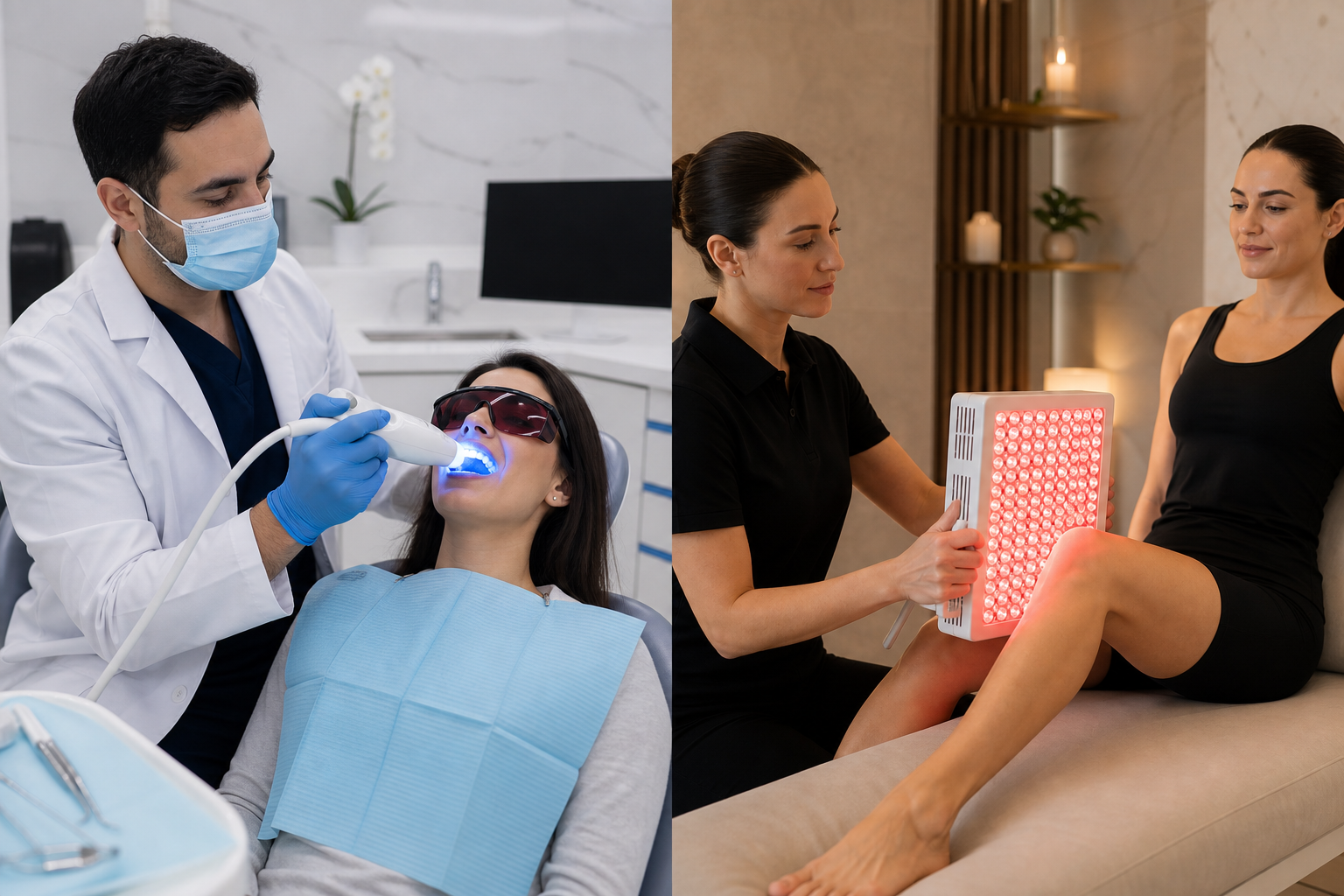
The LED mask used during a facial is not equivalent to the lamp used for dental whitening. Neither is the same as a medical laser or ultraviolet treatment.
The form currently dominating wellness spaces is usually photobiomodulation, often called red light therapy or low-level light therapy.
It exposes the body to controlled red or near-infrared light. The proposed effect is not based on heat or burning tissue. Instead, the light may influence cellular activity, circulation and inflammatory processes.
Think of light as a signal rather than a magic source of energy. Whether that signal produces a meaningful result depends on delivering the correct wavelength and dose to the correct place.
That is why a beautifully designed red lamp may do very little, while a clinically calibrated device might produce a modest benefit.
Can light therapy really give you better skin?
Of the three promises, skin improvement is probably the one most familiar to consumers—and one of the more plausible.
Blue light may help inflammatory acne
Blue light is mainly used for red, inflamed pimples. It can interact with substances produced by Cutibacterium acnes, a bacterium involved in acne, potentially helping to reduce bacterial activity and inflammation.
But blue light cannot treat every type of acne.
The American Academy of Dermatology says visible blue and red light may help treat pimples, but it is not effective against blackheads, whiteheads, deep cysts or nodules. Results also vary, and most people need multiple sessions. Read the American Academy of Dermatology guidance.
For persistent, painful or scarring acne, an LED mask should never delay an appointment with a dermatologist.
Red light may soften signs of ageing
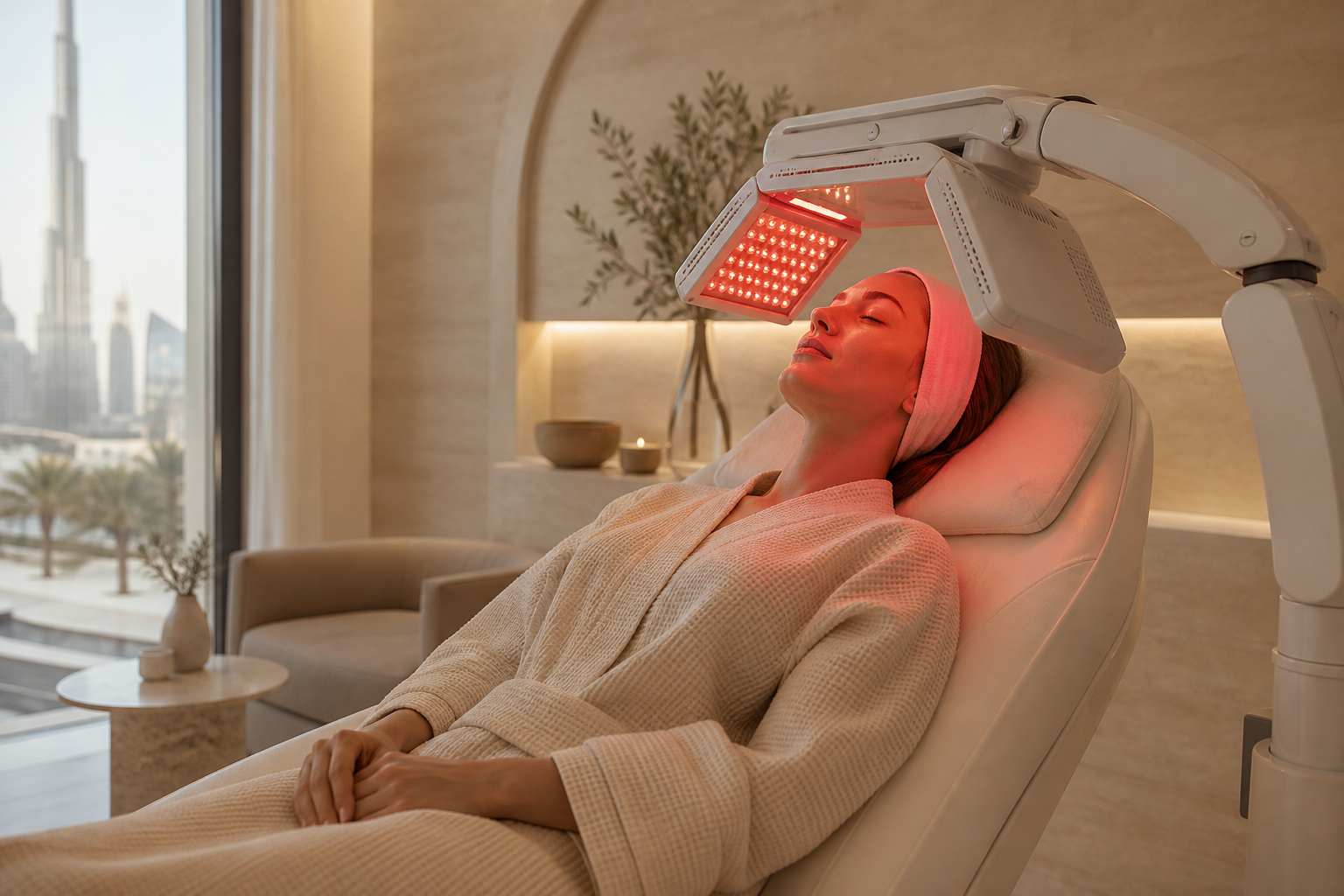
Red and near-infrared wavelengths penetrate more deeply than blue light. They are studied for inflammation, skin recovery and changes associated with collagen production.
Some research suggests that repeated treatment can produce subtle improvements in fine lines, skin texture, redness, dark spots and overall skin appearance.
The American Academy of Dermatology describes
in one study, 90 patients received 8 LED red-light treatments to their face over 4 weeks. More than 90% of patients said they noticed some improvement, including softer and smoother skin, less redness, and lightening of dark spots.
See its red-light therapy safety guide.
One randomized trial involving 137 women found that ten red- or amber-light sessions reduced the measured volume of wrinkles around the eyes. Read the clinical trial on PubMed.
The verdict on skin
- Useful: Mild inflammatory acne, fine lines, redness and skin recovery.
- ORA verdict: Promising as a consistent supporting treatment, provided the device and expectations are appropriate.
Is light therapy safe?
Red and near-infrared light do not use the ultraviolet radiation associated with sunburn and skin cancer. Short-term use of an appropriate device is generally considered low risk.
People with darker skin tones may be more sensitive to visible light and could have a greater risk of hyperpigmentation. Long-term effects of frequent home treatment also require further research.
So, is the light-therapy boom justified?
Light is not merely decorative. Specific wavelengths delivered under controlled conditions can produce biological effects and may have useful roles in dermatology, dentistry and pain management.
For skin, LED therapy may provide gradual improvements in inflammatory acne and signs of ageing. In dentistry, the whitening gel does more of the work than the blue lamp, although photobiomodulation may help manage sensitivity in some cases. For joints, red or near-infrared light may reduce pain, but it has not been shown to magically rebuild or strengthen them.
Explore more ORA wellness stories and our guide to the best wellness hotels in the UAE.
This article provides general information and is not a substitute for medical, dental or physiotherapy advice.