The UAE’s Medical Tourism Boom: Who Is Flying In for Treatment?
A patient from Kuwait arrives in Abu Dhabi for complex heart treatment. A British visitor books dental care during a Dubai holiday. A couple from India travels privately for fertility treatment. A Russian-speaking traveller schedules dermatology appointments around a week at the beach.
They are all healthcare travellers—but they are not buying the same experience.
So, who is actually travelling to the UAE for treatment—and why would someone choose it over less expensive destinations such as India, Thailand or Turkey?
The answer reveals what the UAE is really selling.

Dubai’s health-tourism numbers are impressive
Dubai welcomed more than 691,000 international health tourists in 2023, according to figures released by the Dubai Health Authority. Together, they spent more than AED1.03 billion on healthcare services.
That was an increase from approximately 674,000 health tourists and AED992 million in medical spending during 2022. The wider economic impact—including hotels, aviation and other services—was estimated at AED2.3 billion. Read the official Government of Dubai report.
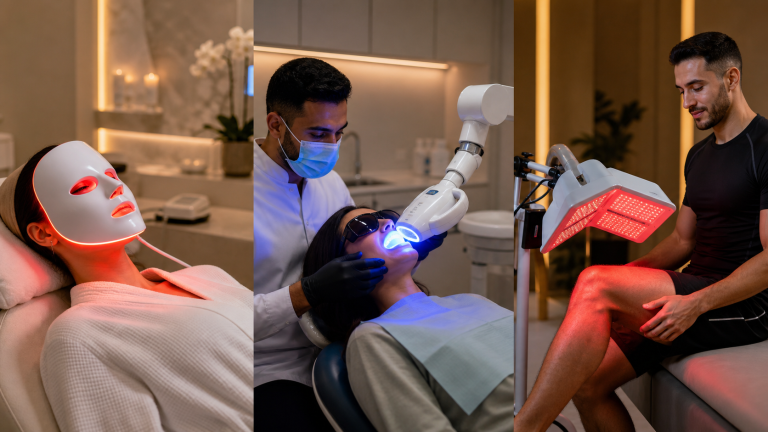
Not every international patient is flying to Dubai for major surgery. The sector includes everything from dental appointments and dermatology to fertility treatment, recuperation, specialist consultations and healthcare required unexpectedly during a holiday.
Dubai’s biggest health-tourism specialties in 2023 were:
- Dentistry — 29%
- Dermatology — 27%
- Gynaecology — 13%
These figures suggest that much of Dubai’s appeal lies in accessible outpatient care that can fit relatively easily into a wider trip.
Where are Dubai’s health tourists coming from?
Official 2023 data provides regional shares rather than a definitive country-by-country league table:
- Asia: 33%
- Arab and GCC countries: 28%
- Europe and the Commonwealth of Independent States: 23%
An earlier Dubai Health Authority investment guide identified India, the United Kingdom, France, Pakistan, Russia, Egypt, the Philippines, Saudi Arabia and Lebanon among important source countries. See the Dubai Health Investment Guide.
Gulf countries: close enough for care and follow-up
Kuwait, Saudi Arabia, Oman and Bahrain are among the UAE’s most valuable international healthcare markets.
The attraction is easy to understand:
- Short flights—or, in some cases, travel by road
- Familiar culture and Arabic-language services
- Easier travel for accompanying family members
- Convenient return visits and follow-up appointments
- Access to specialists without flying to Europe or North America
- High levels of privacy and personalised assistance
Kuwait
Kuwait was the largest international source market for Cleveland Clinic Abu Dhabi in 2024.
Kuwaiti patients may seek advanced cardiology, ophthalmology, neurology, urology, cancer treatment and transplant services. For families who might otherwise consider Britain, Germany or the United States, Abu Dhabi offers specialist care much closer to home.
The appeal is not based on price. It is based on reducing the distance, uncertainty and cultural disruption surrounding a difficult medical journey.
Saudi Arabia
Saudi Arabia was Cleveland Clinic Abu Dhabi’s second-largest international source market in 2024 and has long been important to Dubai’s healthcare sector.
Patients may visit for fertility care, orthopaedics, eye treatment, cardiology, cosmetic procedures or a specialist second opinion. Privacy can also influence the decision—particularly for fertility, aesthetic or other sensitive treatments.
However, the UAE cannot take this market for granted. Saudi Arabia is investing heavily in its own hospitals, international partnerships and specialist services.
Oman and Bahrain
Omani patients benefit from extremely convenient travel and strong professional links between doctors in Oman and the Emirates. Referrals may begin before the patient leaves home, allowing UAE specialists to review records and prepare a treatment plan in advance.
Bahrain is a smaller source market, but it was fourth among Cleveland Clinic Abu Dhabi’s international patient origins in 2024. Patient value may be driven less by volume and more by specialised cases requiring advanced hospital resources.
South Asia: enormous connections, complicated numbers
India and Pakistan are natural healthcare markets for the UAE because the countries are connected through business, aviation and family networks.
They are also difficult to measure accurately.
Millions of Indian and Pakistani citizens live in the Emirates. A Pakistani resident receiving treatment in Dubai is an expatriate patient—not a medical tourist. A patient flying from Karachi specifically for treatment is.
Why would an Indian patient choose the UAE?
India is itself one of the world’s largest medical-tourism destinations and can provide many treatments at a lower price.
An Indian patient may still select Dubai because they already travel to the UAE for business or family, want a particular doctor, value privacy, live elsewhere in the Gulf or want treatment to fit around an existing trip.
Common areas may include fertility treatment, dermatology, cosmetic procedures, orthopaedics, screening and specialist consultations.
The UAE is unlikely to compete with India on price. It can compete on convenience, privacy and service.
Pakistan and complex care
Pakistan ranked third among Cleveland Clinic Abu Dhabi’s leading international source countries in 2024.
Some Pakistani patients travel for complex cardiology, neurology, cancer treatment, ophthalmology or advanced diagnostics. These are generally patients with insurance, institutional support, substantial personal resources or a highly specific medical requirement.
Russia and the CIS: familiarity supports the journey
Russia has long appeared among Dubai’s significant health-tourism markets.
Direct flights, Russian-speaking staff and an established Russian-speaking community make the city relatively easy to navigate. Many visitors already understand Dubai as a tourism, business or residential destination before considering it for healthcare.
Patients may seek dental care, dermatology, cosmetic procedures, fertility treatment, health screening and private specialist consultations.
Turkey or parts of Eastern Europe may offer lower prices. Dubai’s advantage is a familiar, premium environment where transport, accommodation and clinical appointments can be organised around one trip.
Britain and Europe: travelling for choice, not simply cost
The United Kingdom, France and other European countries have appeared in Dubai’s health-tourism data.
The UAE is not normally the least expensive option. Instead, Dubai attracts visitors who already know the city, value privacy or speed, prefer an English-speaking private-care environment, or want a wellness and recuperation experience around their treatment.
For these travellers, healthcare may become one carefully planned element of a broader Dubai stay.
The American market is small—but revealing
The United States was fifth among Cleveland Clinic Abu Dhabi’s international source countries in 2024.
That does not mean Americans are travelling to the UAE in huge numbers for inexpensive treatment. The more likely advantages are access to a familiar hospital brand, specialist treatment while living or working in the region, and complex multidisciplinary medicine.
Cleveland Clinic Abu Dhabi reported more than 10,000 international patient encounters in 2024, representing a 35% annual increase. Its leading source countries were Kuwait, Saudi Arabia, Pakistan, Bahrain and the United States. Demand was particularly strong in cardiology, ophthalmology, neurology and urology. Read the hospital’s international-patient report.
Dubai and Abu Dhabi are selling different journeys

Dubai sells healthcare inside a destination
Dubai is particularly suited to elective and outpatient care: dentistry, dermatology, aesthetic procedures, women’s health, fertility, orthopaedics, screening and recuperation.
The city makes it relatively easy to combine a consultation or procedure with flights, hotels, restaurants and leisure. A patient can arrive, attend an appointment and continue with a normal trip—provided the treatment does not require significant recovery or monitoring.
This is healthcare integrated into the city’s wider hospitality system.

Abu Dhabi sells specialist hospital care
Abu Dhabi’s international healthcare reputation is increasingly associated with complex cases.
A patient may travel because they need multiple specialists, advanced diagnostics, cancer treatment, a transplant programme or care from a recognised hospital brand.
The holiday is secondary. Clinical expertise is the main reason for the journey.
Why choose the UAE when other countries cost less?
The UAE has a clear disadvantage: treatment and accommodation can be expensive.
India, Thailand and Turkey may offer comparable procedures at significantly lower prices. The UAE therefore cannot build its entire strategy around affordability.
Its strongest advantages are short journeys from the Gulf, excellent air connections, English and Arabic communication, multilingual medical teams, international hospital brands, privacy, safety, premium hospitality and efficient coordination.
The UAE’s ideal medical traveller is not necessarily searching for the lowest quote. They may be searching for the least complicated high-quality option.
International patient does not always mean medical tourist
An “international patient” could be someone who travelled specifically for treatment, a tourist who became ill unexpectedly, a foreign citizen living in the UAE, a government-referred patient or someone using a UAE telehealth service from overseas.
These patients have different needs and should not always be counted together when comparing destinations.
The 691,000 figure demonstrates that international visitors are using Dubai healthcare services in significant numbers. It should not be interpreted as 691,000 people flying into Dubai for major surgery.
It does not sell one treatment to one type of medical tourist. It sells access: to doctors, hospitals, hospitality and an international country that already understands how to welcome the world.
Explore ORA’s guide to the best wellness hotels in the UAE and discover how Dubai’s Longevity Authority could reshape advanced wellness.
Further reading: Medical Tourism Watch’s analysis of UAE source markets.
This article is for general information and does not replace professional medical advice. Patients should verify providers, costs, travel requirements and follow-up arrangements before booking treatment abroad.